
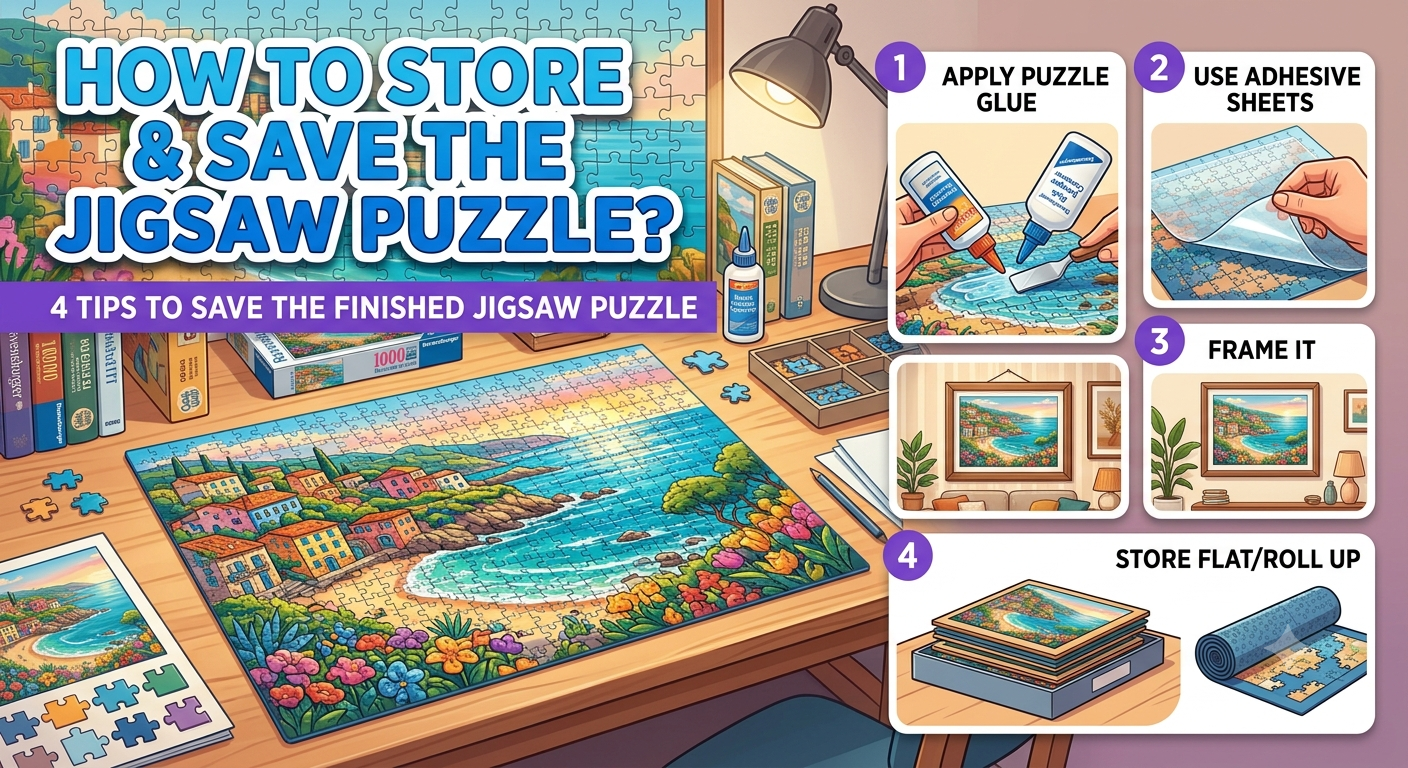
Finishing a jigsaw puzzle is a satisfying achievement. Whether you spent a relaxing weekend putting together a 500-piece landscape or tackled a challenging 2,000-piece masterpiece over several weeks, the last thing you want is for all that hard work to fall apart.
Many puzzle lovers face the same question once the final piece clicks into place: What should I do with my completed puzzle?
Should you frame it? Take it apart? Store it for another day?
The good news is that you don’t have to choose between displaying your puzzle and saving it for the future. With a few simple tricks, you can keep your finished puzzle looking great for years.
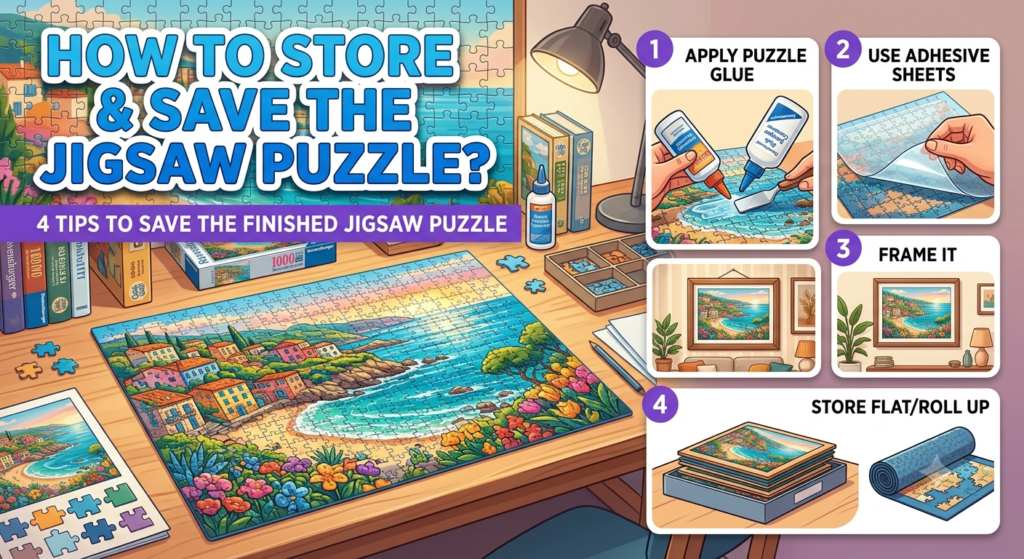
Here are four easy ways to protect and store your completed jigsaw puzzle.
| Storage Method | Cost | Difficulty | Best For |
|---|---|---|---|
| Original Box | Free | ⭐ | Rebuilding later |
| Puzzle Glue | Low | ⭐⭐ | Permanent display |
| Frame | Medium | ⭐⭐⭐ | Wall decoration |
| Zip Bag Storage | Very Low | ⭐ | Humidity protection |
1. Store It Back in the Original Box
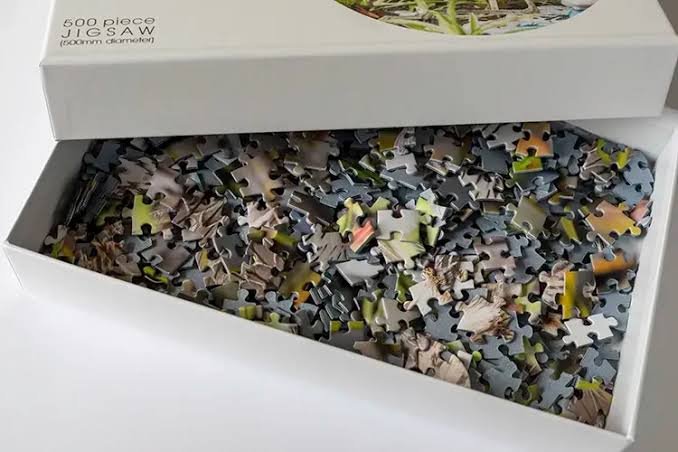
If you don’t have enough wall space to display every puzzle, storing it in its original box is one of the easiest solutions.
Instead of taking the puzzle apart piece by piece, carefully separate it into several large sections. This makes it much easier to rebuild later while protecting the individual pieces from unnecessary wear.
When packing the sections back into the box, avoid placing newspaper, magazines, or printed flyers between them. Ink from printed paper can transfer onto the puzzle surface over time, especially in warm or humid environments.
A sheet of clean cardboard, plain paper, or acid-free tissue paper is a much safer choice.
| Pieces | Finished Size | Recommended Storage |
|---|---|---|
| 500 | ≈49 × 36 cm | Original Box |
| 1000 | ≈75 × 50 cm | Frame or Foam Board |
| 1500 | ≈85 × 60 cm | Wood Board |
| 2000+ | 100 cm+ | Professional Framing |
2. Keep Moisture Away
Humidity is one of the biggest enemies of cardboard jigsaw puzzles.
Moisture can cause pieces to warp, swell, fade, or even grow mold if stored improperly. This is especially important if you live in a region with high humidity or frequent seasonal changes.
Before storing your puzzle:
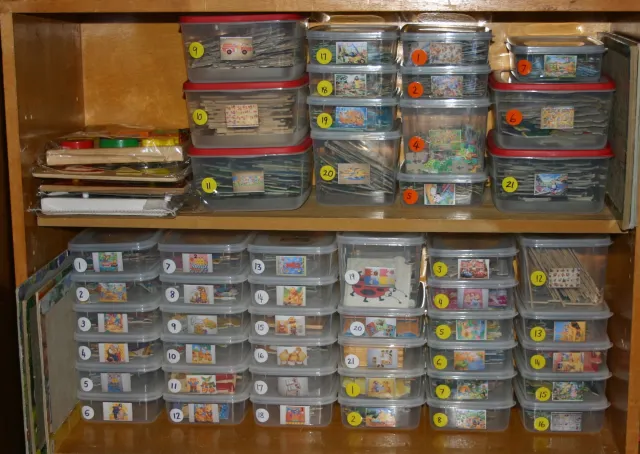
- Place the separated sections inside resealable zipper bags.
- Add a small silica gel packet or another desiccant.
- Store the box in a cool, dry place away from direct sunlight.
Avoid keeping puzzles in basements, garages, or damp storage rooms where moisture levels tend to fluctuate.
Taking these simple precautions can dramatically extend the life of your puzzle.
3. Apply Puzzle Glue Evenly
If you’ve decided to preserve your puzzle as one complete piece, puzzle glue is your best friend.
Many modern puzzle sets already include a small bottle of glue. If yours doesn’t, puzzle glue is inexpensive and easy to find online or at hobby stores.
For the best results:
- Place the completed puzzle on a completely flat surface.
- Pour a small amount of glue onto the center.
- Use a plastic spreader or spatula to gently spread the glue across the entire surface.
- Make sure every section receives an even coating.
Applying too much glue can leave visible streaks or cloudy spots once it dries. Applying too little may cause some pieces to loosen later.
Take your time and spread the glue evenly for a smooth, professional-looking finish.
Allow the puzzle to dry completely before moving it.
| Mistake | Possible Damage | How to Avoid It |
|---|---|---|
| Direct Sunlight | Color fading | Keep away from windows |
| High Humidity | Warping & mold | Use silica gel packs |
| Too Much Glue | Visible glue marks | Spread evenly |
| Improper Storage | Broken sections | Store flat |
4. Choose the Right Backing Board
If you’re planning to frame your puzzle, selecting a sturdy backing board makes a huge difference.
Common options include:
- Thick cardboard
- Foam board
- Thin plywood
- MDF board
The backing should be slightly larger than the puzzle itself so it provides solid support from edge to edge.
After the glue has fully dried, carefully attach the puzzle to the backing board. Once secured, you can place it inside a frame and display it as wall art.
Many puzzle enthusiasts treat finished puzzles like paintings, turning favorite designs into permanent decorations for living rooms, bedrooms, or home offices.
| Storage Condition | Estimated Lifespan |
|---|---|
| Humid Room | 1–3 Years |
| Original Box + Dry Place | 5–10 Years |
| Glued & Framed | 10–20+ Years |
| UV-Protected Frame | 20+ Years |
Should You Glue Every Puzzle?
Not necessarily.
Some collectors prefer to take puzzles apart after finishing them so they can enjoy solving them again later. Others like swapping puzzles with friends or donating them once completed.
If you think you’ll want to rebuild the same puzzle someday, skip the glue and simply store it carefully in large sections inside the original box.
If the puzzle has sentimental value or features artwork you love, gluing and framing it may be the perfect choice.
Common Mistakes That Can Ruin a Finished Puzzle
Many beautiful puzzles end up damaged because of a few simple mistakes.
Try to avoid these common problems:
- Leaving puzzles in direct sunlight, which can fade colors.
- Storing them in damp areas where moisture causes warping.
- Using newspapers that may transfer ink.
- Applying glue unevenly.
- Moving a large completed puzzle without proper support.
Avoiding these mistakes helps your puzzle stay in excellent condition for years.
Extra Tip: Take a Photo Before You Store It
Before packing away your finished puzzle, snap a few high-quality photos.
You’ll always have a record of your accomplishment, and if you decide to rebuild the puzzle later, the image can serve as a helpful reference.
Many puzzle fans even create digital albums of every puzzle they’ve completed, turning the hobby into a personal collection of memories.
Final Thoughts
Completing a jigsaw puzzle takes patience, focus, and plenty of time. Once you’ve finished, it’s worth spending a few extra minutes preserving your hard work.
Whether you choose to store it back in the box, protect it from humidity, glue it together, or frame it as artwork, the right storage method will keep your puzzle looking its best.
With these four simple tips, your completed puzzle can remain a source of pride long after the final piece has been placed. Whether you’re saving it for another rainy day or displaying it on your wall, proper care ensures every piece of your accomplishment stays exactly where it belongs.
| Question | Quick Answer |
|---|---|
| Can I store a glued puzzle? | Yes, keep it flat and dry. |
| Should I glue both sides? | No, the front is usually enough. |
| Can puzzles get moldy? | Yes, if exposed to humidity. |
| Is puzzle glue necessary? | Only if you want permanent display. |